
Drug Pricing Indexes: Average Wholesale Price (AWP)
Cultivating clarity in the complex world of pharmacy benefits is our mission. Today, let's dive into the Average Wholesale Price (AWP), a pivotal element in the pharmacy landscape. Whether you're an industry professional or a curious learner, understanding AWP is essential. This article will break down its basics, explore practical applications, and interpret the fine print that influences various stakeholders across the drug value chain.
1/16/20263 min read
The Basics of AWP
The Average Wholesale Price (AWP) is a term that is often jokingly referred to as "Ain't What's Paid." While it actually stands for Average Wholesale Price, it seldom reflects the actual price paid by any party in the drug value chain. AWP is a price point set by drug manufacturers, reported to proprietary compendia such as First DataBank® or MediSpan®. It's vital to grasp that AWP is not connected to actual wholesale pricing and is typically higher than what consumers pay at pharmacies, particularly for generic drugs.
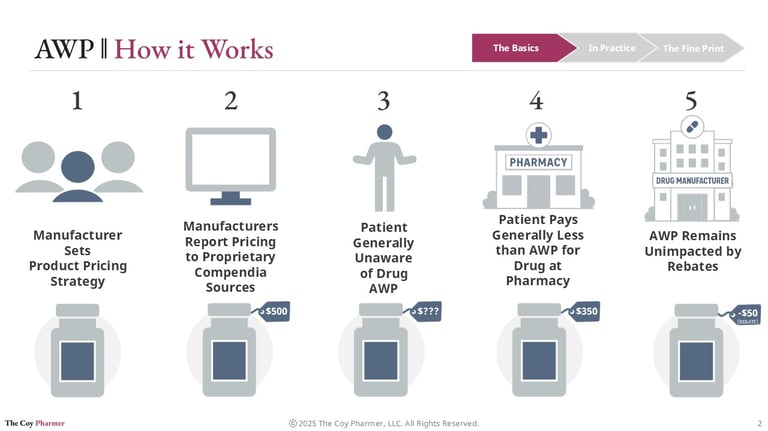
To demystify AWP, consider its parallel in the auto industry: the Manufacturer’s Suggested Retail Price (MSRP). Both are established by manufacturers and unaffected by rebates. Despite the manufacturer's suggested figure, the real transaction prices often differ due to various market dynamics.
A significant component in understanding AWP is its relationship to the Wholesale Acquisition Cost (WAC). Typically, AWP is pegged at about 1.2 times WAC. However, exceptions exist, necessitating a comprehensive understanding of each unique context.
Practical Applications of AWP
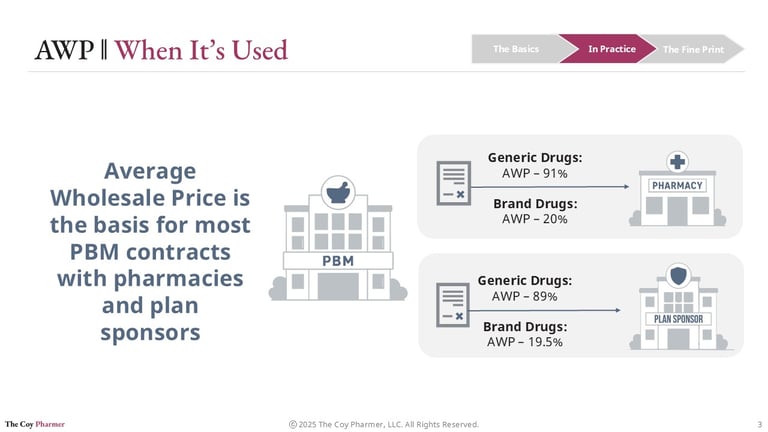
AWP influences numerous decisions in the pharmacy benefits landscape. Most contracts between Pharmacy Benefit Managers (PBMs), pharmacies, and plan sponsors are based on AWP. For pharmacies, PBMs might negotiate scenarios such as reimbursing generic drugs at AWP minus 91% and brand drugs at AWP minus 20%. Contracts with plan sponsors may offer different discounts, allowing PBMs to maintain a margin.
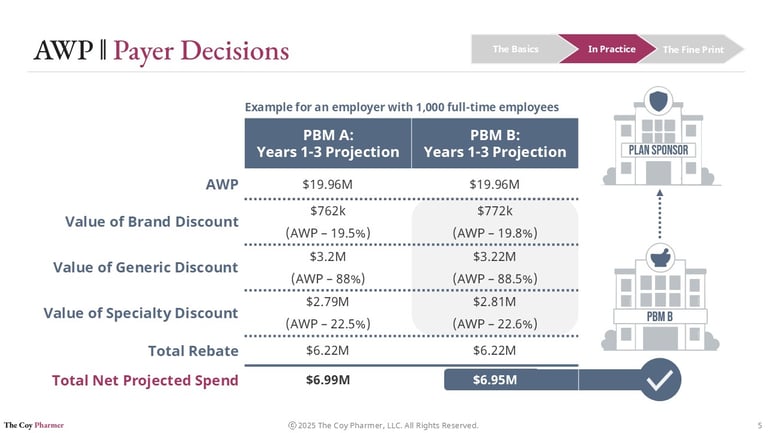
Understanding AWP's impact is critical when considering payer decisions. Pharmacy benefits consultants frequently use AWP-based projections to guide plan sponsors through selecting the most beneficial PBMs. The key lies in evaluating brand, generic, and specialty discounts, alongside the rebates. AWP can significantly tilt these calculations, thus influencing decisions on long-term partnerships and budget management.
The Fine Print of AWP
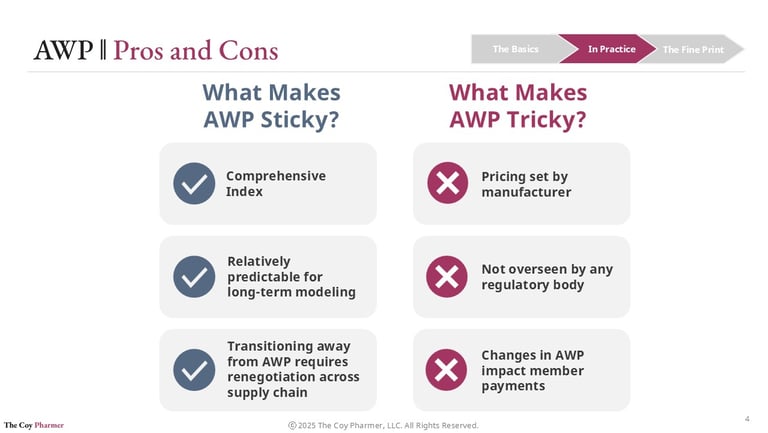
AWP is both sticky and tricky. Its stability over time offers a reliable long-term model even as it increases predictably. However, transitioning away from AWP requires renegotiation across the supply chain, as PBMs balance minimizing risks while transitioning to potentially more favorable grounding beyond AWP.
Conclusion
AWP, while seemingly straightforward, is intricately woven into the fabric of the pharmacy benefits landscape. Its influence stretches from the manufacturer to the PBM and across the value chain, affecting each party uniquely. As with any pricing mechanism, nuances exist, underscoring the importance of a detailed comprehension for all participants within this economic structure.
Thank you for joining us on this journey through the AWP. At The Coy Pharmer, we're committed to aiding your understanding and offering insights into the pharmacy benefits landscape.
Challenges arise given that AWP, set by manufacturers without oversight, offers these producers a pricing control advantage. Moreover, changes in AWP can ripple through high-deductible health plans, impacting member payments and creating unforeseen financial implications.
Understanding the broader implications of AWP increases is crucial. For instance, an increase may allow PBMs to extract additional margin through rebates, while plan sponsors, pharmacies, and members bear varying impacts based on specific contractual terms.
Contact
hello@thecoypharmer.com
© 2025 The Coy Pharmer, LLC. All Rights Reserved.